Dossier
A fair participation in the EU's energy transition
This shift from fossil fuels to renewables promises affordability and energy security but poses challenges in equitable implementation. Vulnerable households often face disproportionate burdens, highlighting the need for socially inclusive policies. Innovative measures like energy sharing, dynamic tariffs, and local transition management are emerging to bridge these gaps. The Heinrich-Böll-Stiftung European Union and the Green European Foundation have worked with experts in energy and social policy to identify key areas where the EU could act to ensure that citizens and households are able to fully experience the benefits of the energy transition, in their homes, communities and pockets.
2025 policy briefs | Clickable infographic | 2024 policy briefs | Related content | Contact


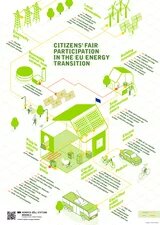
Clickable infographic: Citizens' fair participation in the EU energy transition
For citizens, the energy transition brings many opportunities to cut their bills. They can benefit from cheap renewables, for instance by using solar power from their rooftop. They can reduce their energy consumption, for instance through energy efficient appliances or building renovation. They can also use renewable electricity to move from one place to another. But not every household can afford the new technologies such as solar photovoltaic panels, electric vehicles or heat pumps. The EU offers several rights and regulations that facilitate citizens’ fair participation in the energy transition. Explore our infographic to see which tools make it easier to benefit from the different technologies. This will empower households to escape from rising fossil fuel prices.
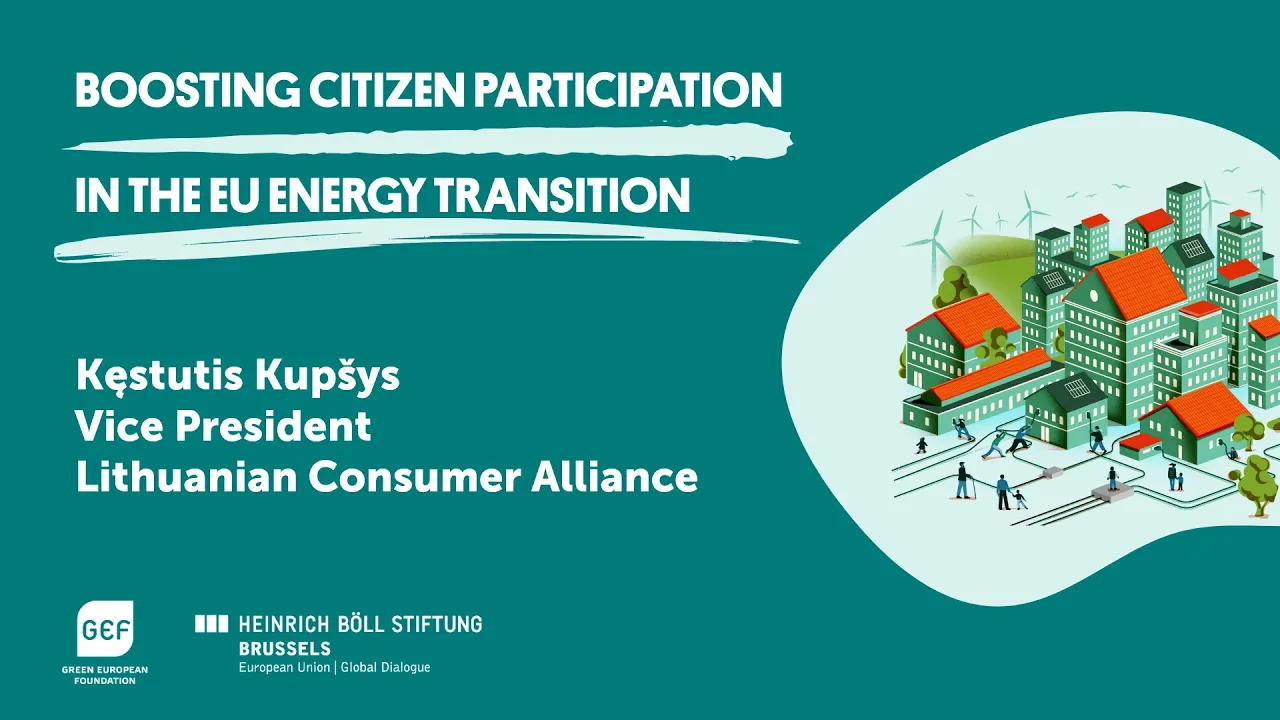
Statement by Kęstutis Kupšys, Vice-President of the Lithuanian Consumers Alliance
Kęstutis Kupšys, Vice-President of the Lithuanian Consumers Alliance - Heinrich-Böll-Stiftung EU | Global Dialogue
 Watch on YouTube